Wednesday, March 13, 2013

New Construction-Greater Phoenix Area

By Darr Colburn                
The number of new building permits in Maricopa County is on the rise.
I have noticed a growing number of new houses going up in the area I live along with the rest of the greater Phoenix area.  This is a great sign after seeing very few new homes built over the past few years.  The inventory of resale homes is low and good properties priced at market value are not on the market very long. Many times multiple offers are received the first day on the market.  This is great for sellers and can be frustrating for buyers.  We just sold a new build to a couple in a subdivision in the NW valley.  The lady in the sales office told me they have already had one price increase and are expecting another one very soon.  Resale home prices in some parts of the valley are up 30% from last year.  We expect many of the lots that were purchased over the last few years at low prices to be built on or sold over the next couple of years as prices continue to rise and the inventory of resale homes stays low. 
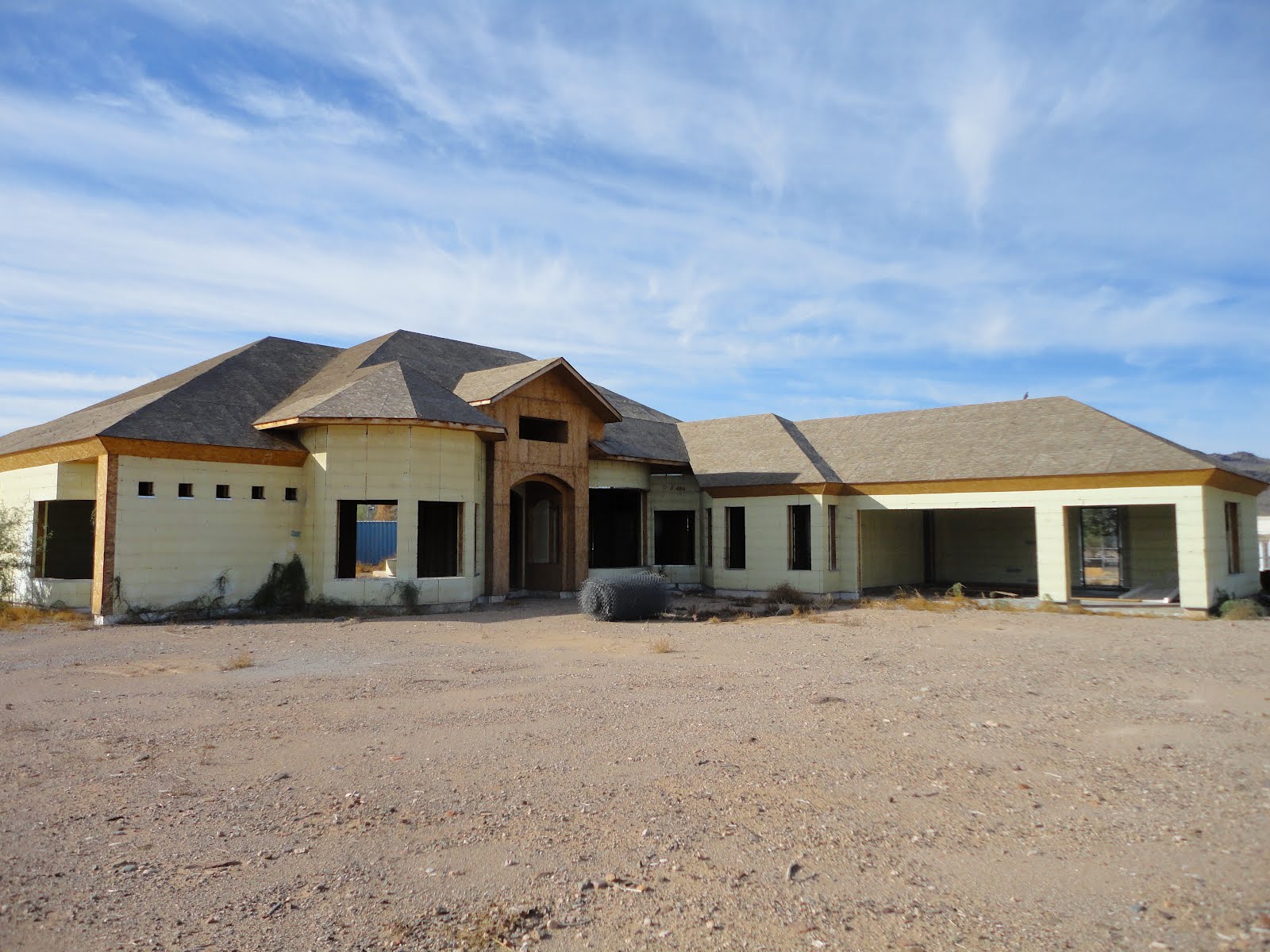
New Construction in the Desert Hills area
If you are  thinking of buying or selling real estate in valley or just want to know what your property is worth give Darr or Jay a call.  Know someone who is looking to buy or sell?  Send us your referrals to get a chance to win a Mexico Coues Deer Hunt.

Darr Colburn
(602) 284-1722
darrcolburn@aol.com                             

Jay Scott
(602) 803-0223

Wednesday, February 27, 2013

Today’s Land Sales, Tomorrow’s Growth

The Republic | azcentral.com Sat Feb 9, 2013 11:55 PM

Steady improvement in metro Phoenix’s new-home market has developers and homebuilders scrambling to buy property for dozens of new subdivisions projected to spring up over the next few years.
Their land purchases offer a road map for population growth in the region for years to come. Where houses are planned, schools, retail and service businesses and other employers soon follow.
Mesa, Gilbert, Chandler and Queen Creek, along with north Peoria, are the hottest spots for new-home sales now, but Surprise, Buckeye and Goodyear are expected to move up quickly.
With new-home building up 71 percent in 2012 over 2011 and the number of available lots dwindling, homebuilders sealed nearly 100 land deals in December alone that will create thousands of homesites. Based on those deals, as well as hundreds of others between builders and landowners in 2012, it’s clear homebuilders are now buying more land in more moderately priced areas in the northwest and southwest Valley as prices continue to rise in the southeast Valley.
The land rush is further evidence that metro Phoenix’s homebuilding industry is recovering from its devastating six-year slump. The area is leading the U.S. for home-price increases, according to S&P Case Shiller. The number of empty lots ready for construction has shrunk to its lowest level in more than a decade, with only enough lots in hand to last builders a year. The shortage, particularly in the southeast Valley, has sent land prices soaring.
In Arizona, the housing recovery is especially important to the broader economy. For decades, the homebuilding industry has been one of the state’s biggest economic engines, with at least one out of every three dollars generated statewide tied to housing, according to Arizona Republic research.
“When I look at what’s going on in the Phoenix-area housing market, I am bullish. Employment and population growth are up. Buyers are purchasing new homes, and builders are making a mad dash to buy more lots to keep up with demand,” said Charley Freericks, president of Scottsdale-based developer DMB. “We have gone over the numbers carefully and see 17,000 new homes going up this year.”
In 2012, nearly 12,000 new houses were built in the region, a 71 percent increase over 2011.
The land purchases are mostly in communities started before the crash and in some ways echo growth in the boom years, except the developments farthest from Phoenix’s core aren’t yet attracting builder or buyer attention. Most of the land purchases are inside the outermost freeways.
A shortage of labor could become a factor. And home prices are projected to keep rising.
In other ways, this is a new era. Growth is projected to continue at a steady pace for the next few years, with the number of houses built to stay below 50 percent of the number that went up in the peak boom year of 2006.
Resurgent demand
Avoiding a repeat of the 60,000 houses built in the region during 2005-06 is good news. This time around, new-home construction is based on real demand from homeowners and not speculation by investors and builders. Metro Phoenix homebuilders began to see more people checking out their model homes and sales start to rise in spring 2012, six months after the resale market had begun to recover.
Most recent new-home buyers had been looking at foreclosure and short-sale homes but were frustrated after getting outbid by investors paying cash. The region’s resale prices plummeted more than 60 percent during the crash but climbed back almost 35 percent in 2012. Thousands of homebuyers suddenly realized they could buy a new home in the area or school district where they wanted to live, for not much more than the top bid on the last short-sale home on which they had made an offer.
The number of new homes built in the Phoenix area climbed 71 percent to 11,600 in 2012. New-home sales followed the trend, with buyers closing on 10,034 new houses last year, up 41 percent from 2011. These are the biggest jumps for the new-home market since 2006. The median price of a new house climbed almost 15 percent during 2012 to reach $240,000.
“The recovery in the home market is real. It’s not about wishing and building for buyers who aren’t there or can’t afford the house,” said Arizona real-estate analyst RL Brown, co-publisher of the Phoenix Housing Market Letter.
Housing analysts, including Brown and Housing Market Letter co-publisher Greg Burger, forecast that homebuilding will increase each year until at least 2016. In 2016, at least 30,000 new houses will be built in the Phoenix area, Brown and Burger project.
Real-estate analyst Mike Orr believes builders must construct more houses in the Phoenix area this year to keep up with buyer demand. Another reason: The number of houses offered for resale has hovered near a record low for the past year.
“It seems many people may have decided to hang onto their homes in an effort to let values keep going up. I also anticipate another possible drop in supply this spring,” said Orr, of Arizona State University’s W.P. Carey School of Business. “Unless homebuilders can start keeping up with rising demand, we may have a chronic supply problem.”
Flurry of deals
Builders had been able to keep new-home prices relatively low until late last year because they had inventories of inexpensive lots purchased during the recession. Now, most builders must buy more expensive land to replenish their supply, which housing analysts say led to 1,000 deals between builders and landowners in 2012, with more to come.
Fewer than 21,000 lots remain ready to be built on in metro Phoenix’s planned communities, compared with 75,000 in 2003, according to a new analysis from RL Brown Reports.
Land broker Nate Nathan, president of Scottsdale-based Nathan & Associates, said that based on new-home building projections, there are only enough lots in the pipeline to last builders a year.
Land generally changes hands several times before a house is built on it. First, it’s often part of a larger tract sold through a land broker to a developer or investor. Developers then plan a community and sell lots ready for construction to homebuilders such as Pulte, Meritage, Fulton and Shea. Homebuilders typically then create their own subdivisions, with model homes and sales centers, and begin selling houses to consumers.
The price for a standard 60-foot lot is increasing from housing-crash levels of 2009, rising more than 100 percent in many areas of the Valley in just three years. Nathan said the region’s home-lot prices are rising faster than in any other part of the country.
Because of builder demand, the prices for bulk land sales also are increasing, which means new houses likely will cost more, no matter where they are located in the region. In February 2012, Maracay Homes paid $50,000 a lot for land in Chandler. In late December, K Hovnanian Homes paid $88,000 a lot for land in Chandler, according to public real-estate records.
“It’s hard for many buyers to hear, but home prices are going up,” said Ken Peterson, vice president of Shea Homes’ Arizona office. “But it’s a good time to buy, because prices are going to keep rising for a while.”
What’s driving rising prices
Metro Phoenix’s homebuilding recovery began in the southeast Valley, and Mesa, Gilbert, Chandler and Queen Creek are expected to draw the most new-home buyers again this year. Nearly 50 percent of the region’s new homes were built and sold in the southeast Valley in 2012, and the area is expected to draw almost 40 percent of this year’s buyers. Maracay Homes plans to open 13 new communities in the Phoenix area this year, and eight of those will be in the southeast Valley.
“We moved early to buy land in 2009, when prices were low,” said Andy Warren, Maracay president. “Now, we have lots ready for new homes where buyers want to go and don’t have to get in bidding wars with other builders for land in the southeast Valley.”
The typical lot in the southeast Valley sold for $35,000 in 2009, according to Nathan & Associates. At the end of 2012, the average price for the same type of lot in the area sold for $75,000.
Kim Underwood, who now rents in Tempe, has been shopping for a new home in the southeast Valley for the past few months. Prices are higher than she expected, so she’s expanding her search.
“I know a couple who bought for under $300,000 in Gilbert last summer. I looked at houses in their neighborhood, and prices were $20,000 to $30,000 higher,” she said. “I wanted to be close to my job in Tempe and buy a new home, but now I am looking in the north Valley or even the southwest as long as the community is close to a freeway.”
Several homebuilders say land prices are climbing too high in Chandler to build houses that most current shoppers can afford.
Most of the less-expensive vacant lots left in the southeast Valley are in Gilbert, Mesa and Queen Creek. The Gilbert developments Elliot Groves at Morrison Ranch, near Elliot and Recker roads, and Layton Lakes, at Queen Creek and Lindsay roads, have several hundred lots available. Builders bought 700 lots in the new community Eastmark, near Phoenix-Mesa Gateway Airport, and plan to start selling homes there this year. Thousands more new-home lots in the development are planned. In Queen Creek, Nauvoo Station at Ocotillo and Crismon roads and Hastings Farms at Ellsworth and Cloud roads have hundreds of lots available as well.
The recovery of the homebuilding market will have little impact on Scottsdale, where there’s not much vacant, developable land.
There is available residential land in north Phoenix but, as in Chandler, lot prices there are higher.
New horizons
The southeast Valley dominated homebuying as a region in 2012, but Vistancia in north Peoria was Arizona’s top-selling community. And homebuilders are purchasing more land in the northwest and southwest Valley, betting on those areas attracting more buyers.
Although new-home lot prices in Peoria are similar to those in the southeast, current land costs in Surprise or in the southwest communities of Buckeye and Goodyear are at least $20,000 less per homesite. More lots are also available for purchase in these areas.
Whether new-home buyers flock to the West Valley like they have to the southeast isn’t a sure thing. And so far, neither builders nor home shoppers are doing any serious buying in most parts of Pinal County or west of the White Tank Mountains. New-housing developments in Pinal and the far southwest Valley were hurt the most by the crash.
Brown said a geographic shift in homebuying will depend on whether the communities are close to freeways, jobs and retailers, no matter how much more affordable the new houses are.
“The ‘drive until you qualify’ homebuilding trend worked before because the mortgage market didn’t really require borrowers to qualify for the loans they were taking out,” Brown said. “Lending guidelines are much tougher, and borrowers will really have to be able to afford the payments on a new house.”
In position
Land purchases are continuing in early 2013, and early indicators show new-home sales and prices continue to rise. After the housing crash and the long climb out, metro Phoenix’s major developers and builders hope to cash in on the continued growth.
The region’s top-selling homebuilders — Pulte, Lennar, Richmond American and Maracay — have the most land. Tempe-based Fulton Homes reports selling 52 houses during January. Builders that shuttered Phoenix operations during the crash also are buying land in the region, hiring employees and trying to compete with builders still here.
DMB owns some of the communities with the most available land ready for new houses: Eastmark in Mesa, Marley Park in Surprise and Verrado in Buckeye.
“We sold 87 homes in the Phoenix area during the terrible year of 2009,” DMB’s Freericks said. “Last year, 364 new homes were sold in our Valley communities. We are expecting 637 new-home sales this year.”

Friday, February 22, 2013

Phoenix-area Home Values Climb after 2011 Dip

The Republic | azcentral.com Thu Feb 21, 2013 11:02 PM

Most metro Phoenix homeowners will see the first increase in their property’s assessed value since 2007 when they receive their annual statement from the Maricopa County Assessor’s Office.
The median value of a house in metro Phoenix climbed almost 16 percent during 2012 after falling 7.6 percent in 2011.  The increase won’t surprise anyone who has watched the region’s housing market recover over the past 18 months. However, the overall increase in values for Maricopa County might be confusing because the overall median price of the area’s home sales climbed 34 percent in 2012.
“Our analysis is based on both home sales and the valuations of the even greater number of houses that didn’t sell last year,” County Assessor Keith Russell said. “If a house doesn’t sell, we don’t know if it has new carpet or plumbing, but we must still do the research to assess its value.”  The overall median value of single-family houses in the county climbed to $127,000 in 2012 from $109,600 in 2011.  Statements will be mailed to Maricopa County residents over the next two weeks, with the first group expected to receive their statements as early as today. About 1.5 million properties were valued by the county assessor during 2012.
In 2010, Maricopa County home values fell 11 percent. In 2009, property values dropped 15 percent. In 2008, they plummeted 23 percent, the biggest drop of the prolonged retreat in home values. In 2007, values declined 13 percent.  The property-valuation assessments being mailed out now will be reflected in 2014 tax bills. This year’s tax bills will reflect 2011 valuations.  Despite the drop in home values in 2011, homeowners shouldn’t count on a significant drop in taxes this fall. Many Valley municipalities and school districts still face budget gaps and could raise property-tax rates again this year.  Russell said the county’s residential assessments are conservative, so homeowners can expect to sell their houses for as much as 10 percent more.  Some Phoenix-area cities fared better than others.  Home values climbed the highest — 34 percent — in El Mirage and Youngtown. Tolleson homeowners saw a median increase of 33 percent. Those communities experienced some of the biggest drops in home values during the crash because of higher foreclosure rates.  Property owners can appeal valuations with the Assessor’s Office until April 23.
To appeal the 2012 assessment, go to maricopa.gov/ assessor or call 602-506-3406.
A house’s value has to decline significantly through a reassessment to lower its property taxes, which fund municipalities, school districts and more. Tax bills cannot be appealed.


Tuesday, February 19, 2013

Randy's House

SOLD  MLS# 4847492  $225,000

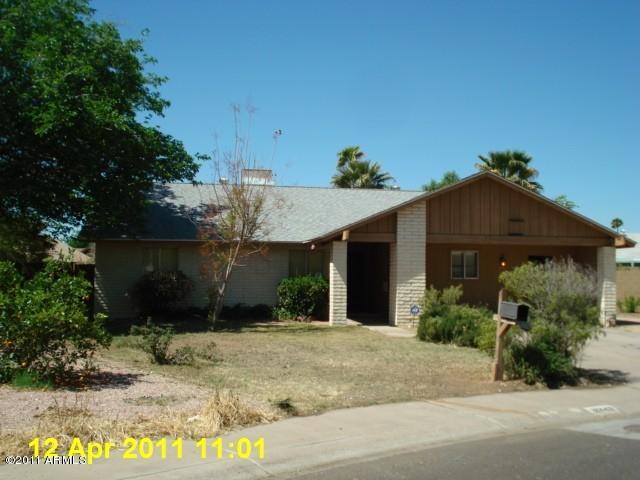
We had been looking for a house in Gilbert for our good friend Randy for over a year.  Randy finally found one that had everything he was looking for including high ceilings to ensure all his animal mounts would fit.  The house was listed as a short sale so we were patient after getting the contract accepted by the seller.  We got the offer accepted by the seller in November and it took until January 23 to get the bank to approve the short sale.  After the bank approval we did a home inspection and then closed escrow on February 15.  Randy's house is in great shape.  The sales price was $225,000.  The house is 4 bedrooms, 2 baths and 1917 sqft.  The home was built in 1998 by Elliot.  The house was renovated in 2010 by the previous owner.  If you are interested in buying or selling a home in the valley please give us a call.  If you know some one who plans to buy or sell a home please give them our name, we love referrals!

Darr Colburn & Jay Scott
Realty Executives
www.colburnandscott.com
(602) 996-9910


Tuesday, March 6, 2012

Colburn and Scott Sold Another House

MLS # 4677055
 We sold this 4 Bedroom 2.5 Bath 3 Car Garage home for $118,500.  This home was framed but not complete and had been sitting for a couple of years.  The house was just over 4000 square feet and was located in the North Valley.  Give Darr Colburn or Jay Scott with Realty Executives a call if you are thinking about buying or selling real estate in the Phoenix area (602) 996-9910.

Do you know someone that is thinking about Buying or Selling Real Estate in the Phoenix area?  We want to help and love referrals.  Darr Colburn (602) 284-1722 darrcolburn@aol.com or Jay Scott (602) 803-0223 js43560@cox.net

Friday, February 24, 2012

Upbeat findings for Arizona housing market

Report: Upbeat findings for Arizona housing market

12 comments by Catherine Reagor - Feb. 23, 2012 06:35 PM
The Arizona Republic | azcentral.com


Metro Phoenix home prices are up. Fewer inexpensive homes are for sale, and the number of pending foreclosures is down.

The positive housing-market update comes from Arizona State University's newest real-estate report.

It's the first monthly housing analysis from Mike Orr, who was recently named director of the Center for Real Estate Theory and Practice for ASU's W.P. Carey School of Business.

"Single-family home prices overall in the Phoenix area have been moving up since they reached a low point in September," Orr said in his debut monthly housing report.

"Also, looking forward, I expect a declining trend in foreclosures."

Orr also publishes a daily online analysis of Phoenix-area housing indicators called the "Cromford Report."

The median price of all home sales, including new homes, reached $120,500 in January of this year, Orr reports. That compares with $113,166 a year earlier.

The average price per square foot of Valley houses has climbed 3 percent since last year.

There were approximately 8,000 new and used homes sold in January, up from 7,500 in January 2011.

Orr said investors have snatched up the oversupply of homes for sale under $300,000.

"Many people think there's a glut of homes the banks are hiding somewhere, and that may be the case in other markets, but not here in the Phoenix area," he said.

"We've gone through so many foreclosures that the system has been working itself out for about five years."

In January, there were 2,450 single-family foreclosures in both Maricopa and Pinal counties, compared with 4,200 during January 2011, according to the ASU report.

The supply of homes listed for sale in metro Phoenix is down 42 percent from a year earlier.

Tuesday, February 14, 2012

Must See JANUARY Market Report

Click here see a Maricopa County Real Estate report

Looks like inventories are really down and demand is up!  Now is a great time to buy and take advantage of the great deals that are out there.

Give us a call for more information!

We love referrals!

Sunday, January 15, 2012

Colburn and Scott Recent Properties Sold

MLS #4569685  5 Bedroom 3 Bath 2591SQFT                         SOLD PRICE $124,900 

MLS# 4526002  3 Bedroom 2 Bath 1600 SQFT  Acre + Lot with Pool, Desert Hills Horse Property
SOLD PRICE $204,000


MLS # 4631578  3 Bedroom 2 Bath 1418 SQFT                     Central Phoenix/Biltmore Area
SOLD PRICE $225,000


We appreciate your business and love referrals!  Please contact Darr or Jay if you are thinking about buying or selling real estate in Maricopa county.  We can do a free market analysis on your property or set up a custom home search based on what you are looking for. 

Friday, July 29, 2011

Phoenix Housing Market Showing signs of Life-WSJ

WALL STREET JOURNAL-JULY 27TH 2011
BY MATTHEW STROZIER
HERE IS LINK TO THIS ARTICLE-
http://blogs.wsj.com/developments/2011/07/27/phoenix-housing-market-shows-signs-of-life/

Phoenix doesn’t usually churn out upbeat housing news. So it’s worth noting reports for the market that look, well, at least not bad.
In June, Phoenix had the strongest resale activity in six years, helping to lift total sales from the year-ago month when federal tax credits were boosting the market. There were about 10,500 sales of new and existing houses and condos during June in the metro area covering Maricopa and Pinal counties, up 8.3% from May and 1.5% from June of last year, according to DataQuick, the real-estate research company based in San Diego. Since 1994, when DataQuick began fully tracking Phoenix, sales have risen 1.8% on average from May to June.
“The main thing would be that we beat the year-ago number, and the year-ago number was inflated by the tax credits,” said Andrew LePage, an analyst with DataQuick.
On prices, the news was uneven. Phoenix-area buyers in June paid a median of $122,900 for all new and resale houses and condos, up 2.4% from the month prior but off 12% from last June. (This bolsters the argument that buyers might have been better off to wait until after the tax credits to house hunt.) And then there’s this sobering fact: The June median for Phoenix was almost 54% lower than the peak of $264,100 in June 2006, back when buyers paid whatever it took to buy a home.
As might be expected, distressed sales were a huge factor in perking up the data, with all-cash buyers and investors swooping in, sometimes from abroad, to grab homes at a discount. Distressed sales, meaning both foreclosure resales and short sales, comprised about 64% of the Phoenix resale market. (Phoenix isn’t the only market seeing this trend, as we’ve reported.)
Although the share of homes bought by investors fell somewhat from earlier this year in Phoenix, it was up from last June. The share of cash buyers followed a similar trend, reaching 41% in June. (Those two categories can overlap because investors may pay all-cash.) First-time buyers continued to fall behind, which showed up in the drop in homes purchased with low down payment mortgages backed by the Federal Housing Administration.
It does seem counterintuitive that there would be a slight rise in sale prices despite the bevy of distressed sales. But falling inventory could be a factor; it was down about 11% in June from May in Phoenix, according to Realtor.com. Foreclosure filings have also fallen in Phoenix and elsewhere, either due to market saturation or legal problems, according to RealtyTrac, but that could change and inventory could spike.
Brokers in Phoenix say there’s increasing competition for distressed deals. “My business, right now, is probably about 40% investors,” said Susan Ramsey, an agent with Re/Max Professionals and president of the Phoenix Association of Realtors. “They actually see this as probably, if not the bottom, it’s as close as we’ve been. I’m actually seeing prices leveling out.”
Case in point: Ms. Ramsey’s brokerage recently sold a foreclosure property — a three-bedroom home in good condition with a pool and mountain views — for about $233,000, and there were multiple offers.
DataQuick uncovered several other notable trends, including the precipitous drop in new-home sales, down 38% in June from the year-prior month. They were up slightly from May, but it was still the lowest total for a June in 14 years. For builders, these are tough times indeed.

Friday, July 8, 2011

Phoenix Area Housing Market gaining ground


by Catherine Reagor July 8th 2011
ARIZONA REPUBLIC

Frenzied home-sales activity in June proved earlier speculation about a third dip in metro-Phoenix home prices to be untrue.
The median price of an existing home in the region climbed to $118,950 last month, after hovering at a real-estate crash low of $115,000 for six straight months, according to the Information Market, a realty-data company.

The rate of home sales also rose, with a nearly record 9,450 used and new homes sold in Maricopa County in June, the largest monthly number since the end of housing boom in December 2006. And that number doesn't include the more than 1,300 homes sold at foreclosure auctions by lenders.
The home-sales market has been dominated by foreclosure homes, but foreclosures also declined. The region had 2,000 fewer active foreclosure filings in June than May. At the same time, the number of homes for sale was down nearly 10 percent from May.
The combination means a decrease in inventory, as more foreclosure homes are resold and fewer homes come on to the market to replace them. That drop in supply helps trigger an uptick in prices.
Market indicators started to show signs of a recovery in March. The recent numbers are a further confirmation.
"Supply continues to drop while demand is extremely strong," said real-estate analyst Mike Orr, who publishes the online daily "Cromford Report."
He said there are still some market watchers who believe there is a large "shadow inventory" looming over Phoenix. These homes, which aren't in foreclosure but could soon be taken back by lenders, could flood the market and drive prices down again. But his figures show Phoenix's shadow inventory has been steadily falling since November 2010 and won't impact prices.

Who's buying in Valley

Most of the buyers of Valley homes continue to be investors, according to public records.
More than 1,300 foreclosure homes sold in June at what are known as trustee-sale auctions, the Information Market said. Those sales aren't included in the overall tally for metro Phoenix's home sales because public documents record them differently. But those auction sales definitely contribute to a shrinking inventory and higher home prices.
Many auction buyers are paying cash, and bidding wars are typical now as people try to buy the houses on the courthouse steps, hoping either to turn them into rentals or flip them for a quick profit.
The new-home market continues to struggle. Housing analyst RL Brown, who publishes the "Phoenix Housing Market Letter," said the wide disparity between foreclosure resales and new-home prices will continue to hurt the homebuilding market.
Short sales in the Valley climbed almost 50 percent in June from May, according to the Arizona Regional Multiple Listing Service. In these sales, lenders agree to let distressed borrowers sell a home for less than they owe, ensuring the bank gets some money rather than having to foreclose. The increase in these sales signals that more lenders are working with buyers to avoid foreclosure.
Some real-estate agents are finding it more difficult to find homes for clients to buy because listings are steadily falling.
Julie Bieganski, a Phoenix real-estate agent and investor, tracks the drop in listings every day and said it's much tougher to find deals on homes for herself and clients.
On July 1, Orr's data showed 28,827 active listings across metro Phoenix, down 8 percent from June 1 and down 30 percent from July 1, 2010.

The forecast for July

June has traditionally been a strong month for the housing market as more families look for homes before the school year starts. But investors are motivated differently, more by the timing of the short sale or foreclosure auction they are interested in.
Last year, a federal tax credit spurred many home sales, but that incentive is gone. Now, because of tighter lending guidelines, it can be more difficult for traditional buyers who are trying to obtain mortgages.
However, if the sales activity on June 30 is any sign of what is to be expected of July, the Valley's housing market could be in for another strong month. A record 2,216 homes sold on that day, more than any other single day in history.
"I was not surprised the median home price increased. It was something we were expecting," said Tom Ruff, a real-estate analyst with the Information Market. "July could very well be a landmark month as some buyers start to realize what the investors have known for quite some time. Historically low prices coupled with historically low interest rates make a very strong tonic."


Read more: http://www.azcentral.com/business/realestate/articles/2011/07/08/20110708arizona-housing-market-gaining-ground.html#ixzz1RW0Gfgkh

Thursday, June 30, 2011

Recent Sold Properties

Recent Property Sales by Colburn and Scott

Sold for $525,000

Sold for $325,000
Sold for $97,700

Sold for $99,500

Sold for $112,300
Sold for $82,000

Custom Home Lots sold Below